Gutenberg
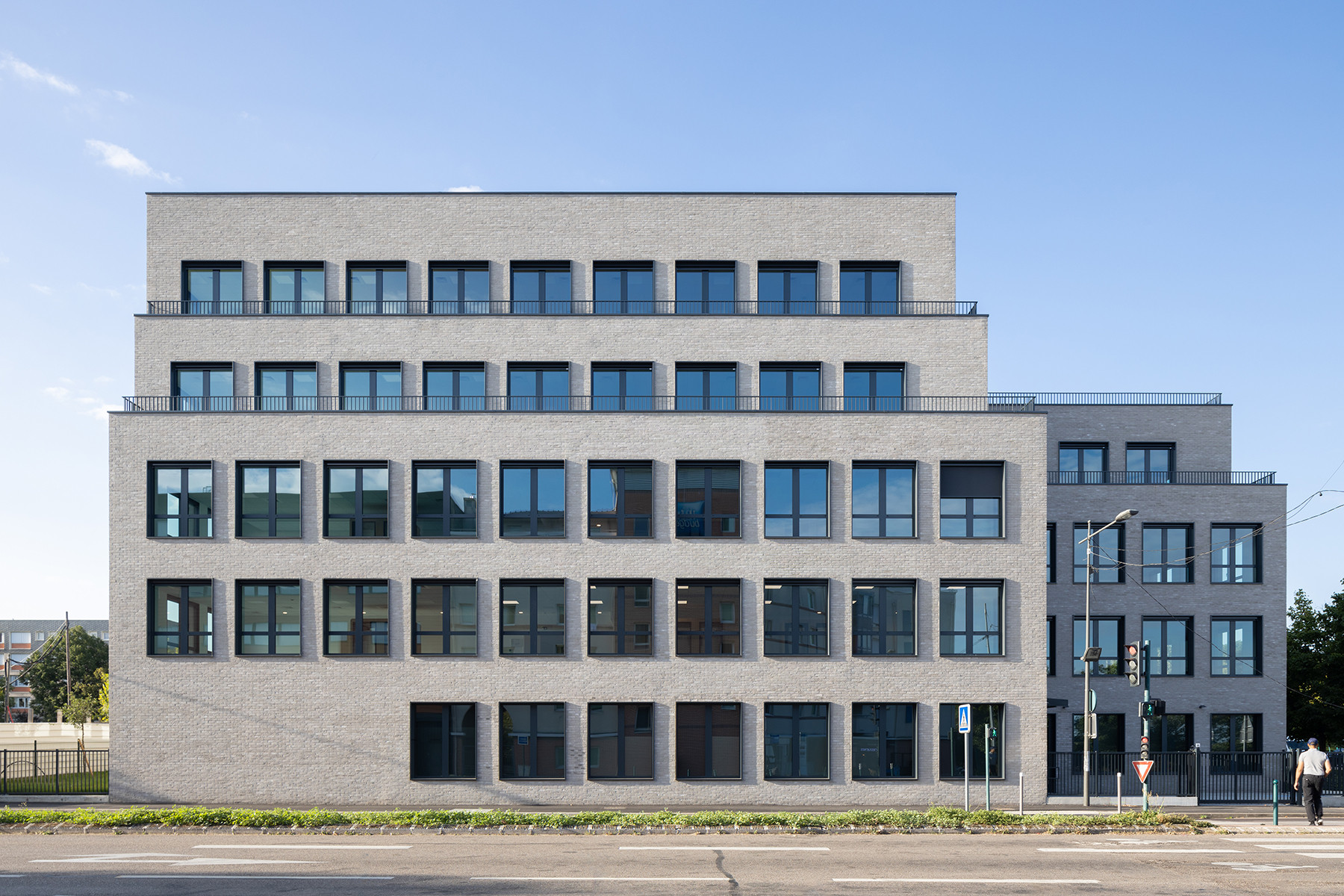
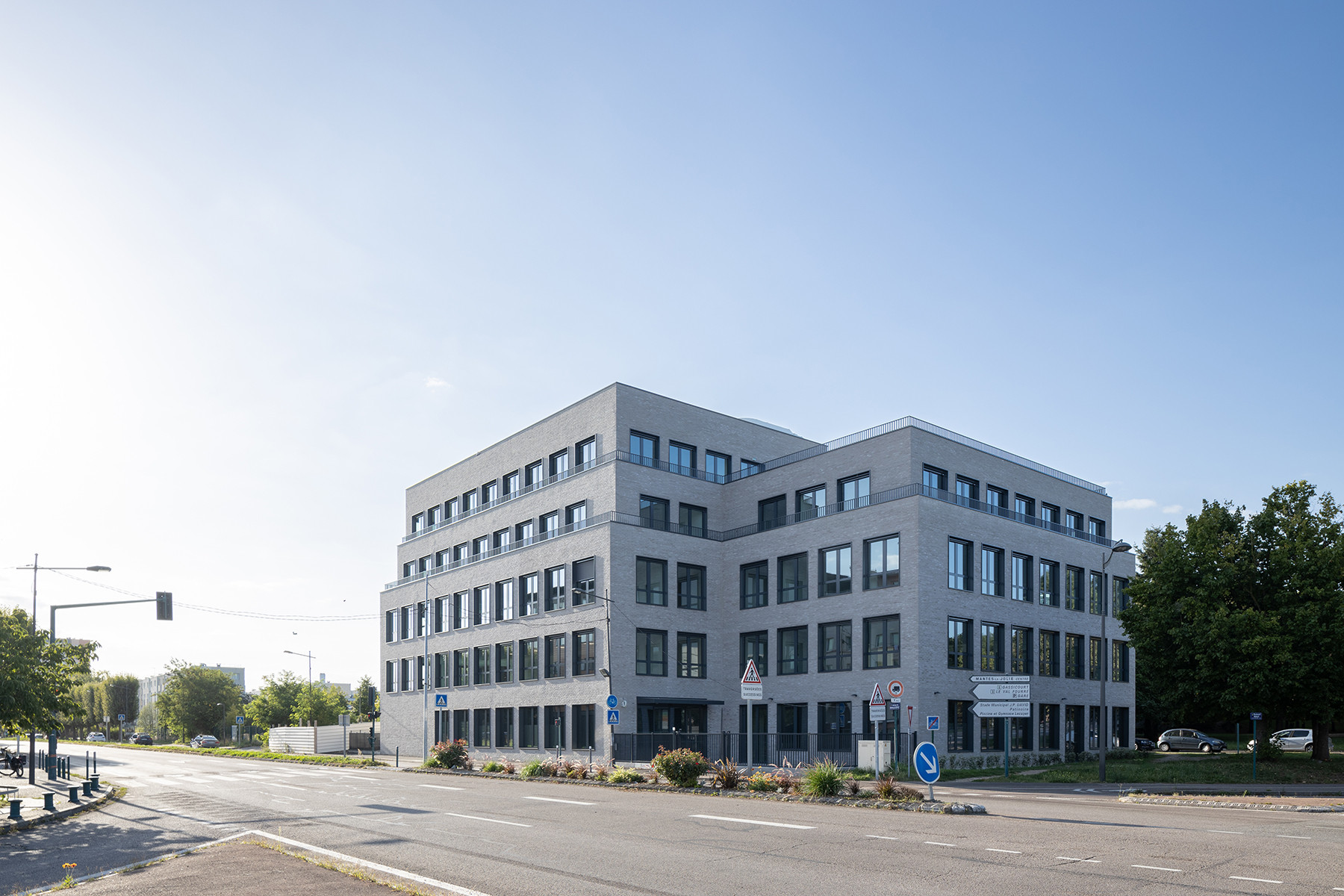
Le projet se situe à l’entrée de la ville de Mantes-la-Jolie, dans une zone en cours de réaménagement. La ville souhaite redynamiser le quartier en construisant de nouveaux lieux d’activité et de vie, le bâtiment répond à cet enjeu en accueillant des bureaux.
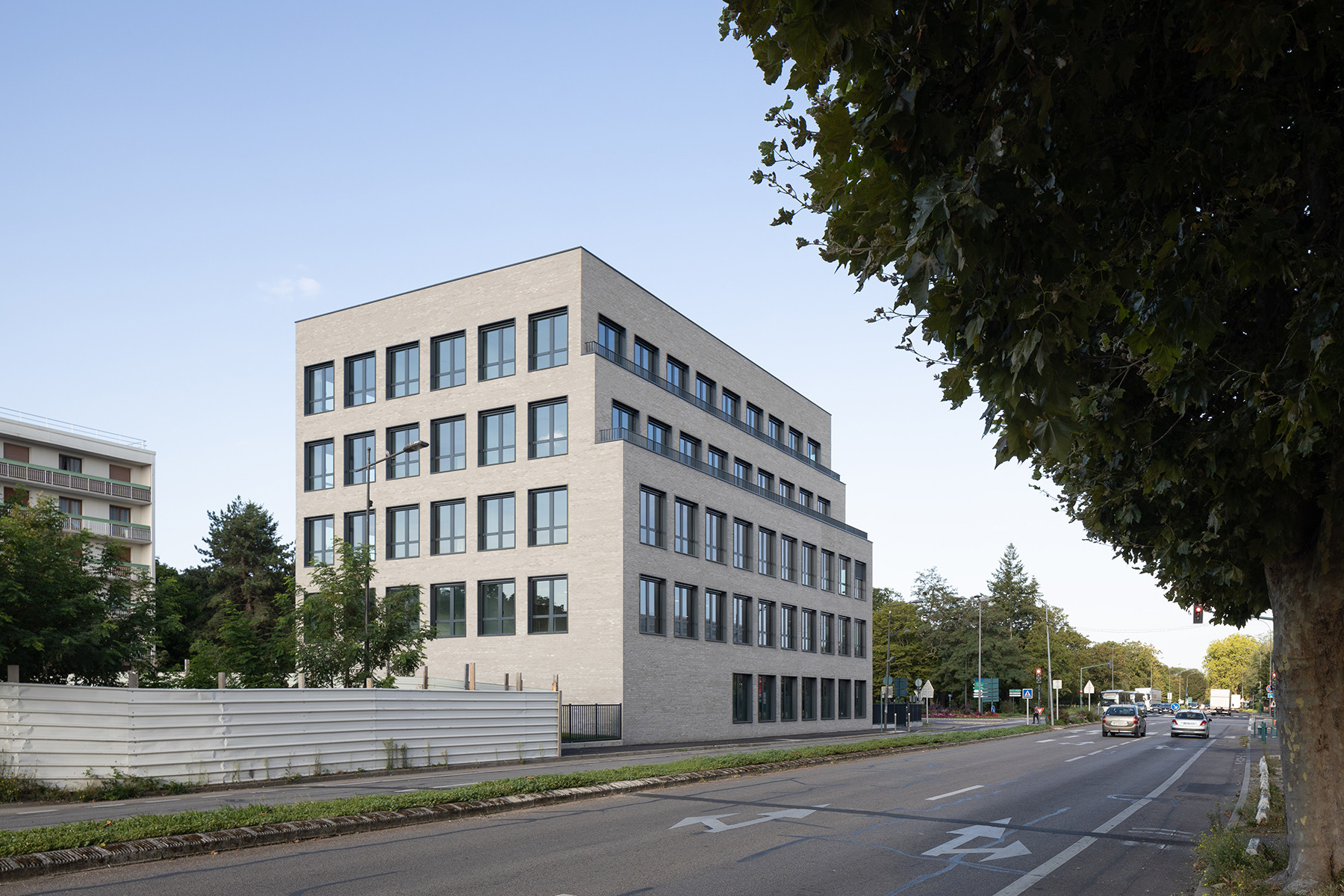
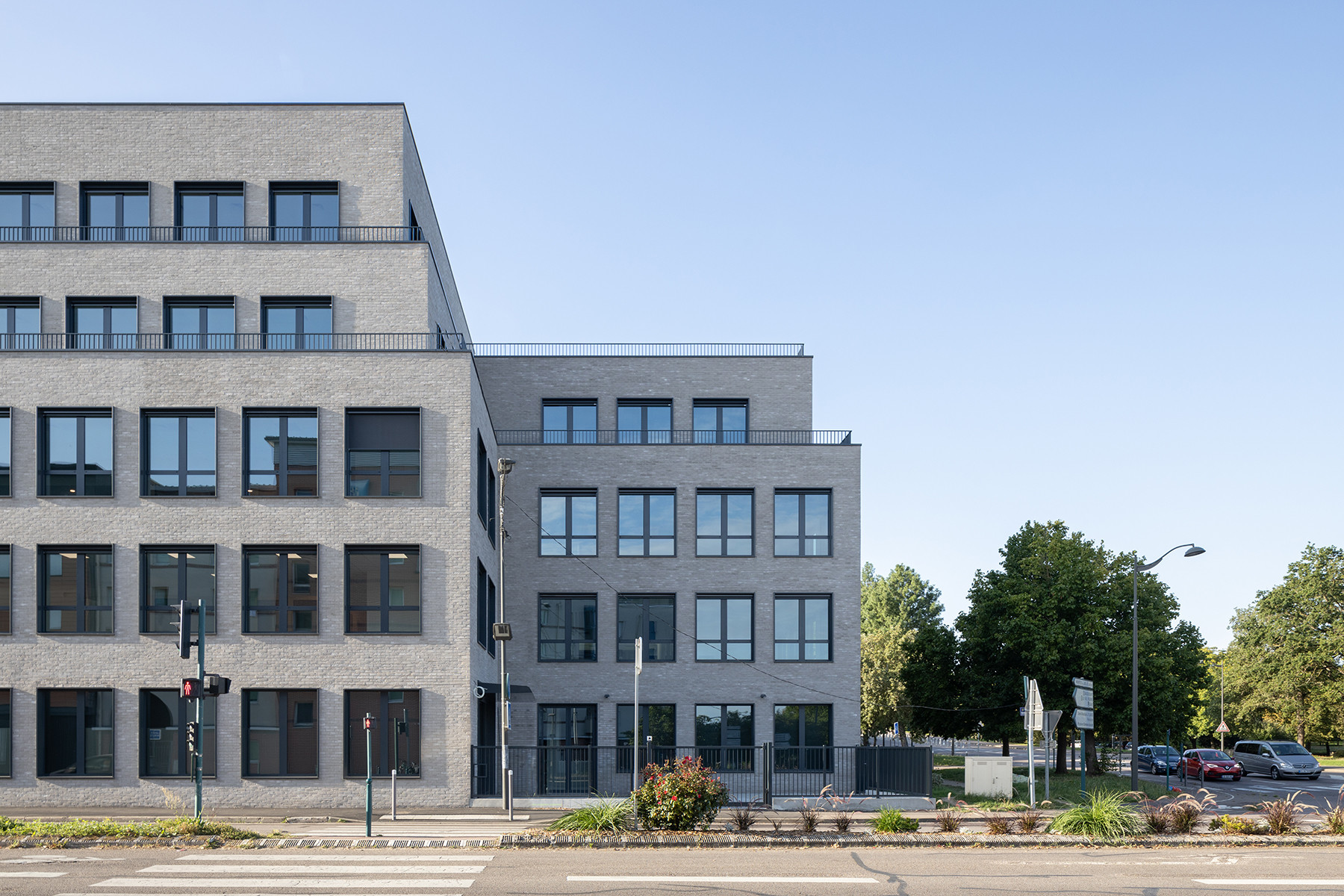
Le projet est constitué d’une volumétrie en deux parties, l’une à R+3, l’autre à R+4. L’articulation et le décalage entre ces deux volumes répondent à la volumétrie opposée sur l’avenue du Général De Gaulle. Le bâtiment s’intègre donc dans son environnement et participe à la mise en valeur de l’entrée de ville. L’axe des voies environnantes est souligné par l’emprise du bâtiment et l’accès aux bureaux est marqué par un retrait de façade. Le jeu de volumes forme 2 attiques successifs et permet également la création de terrasses et des espaces extérieurs accessibles pour les bureaux.
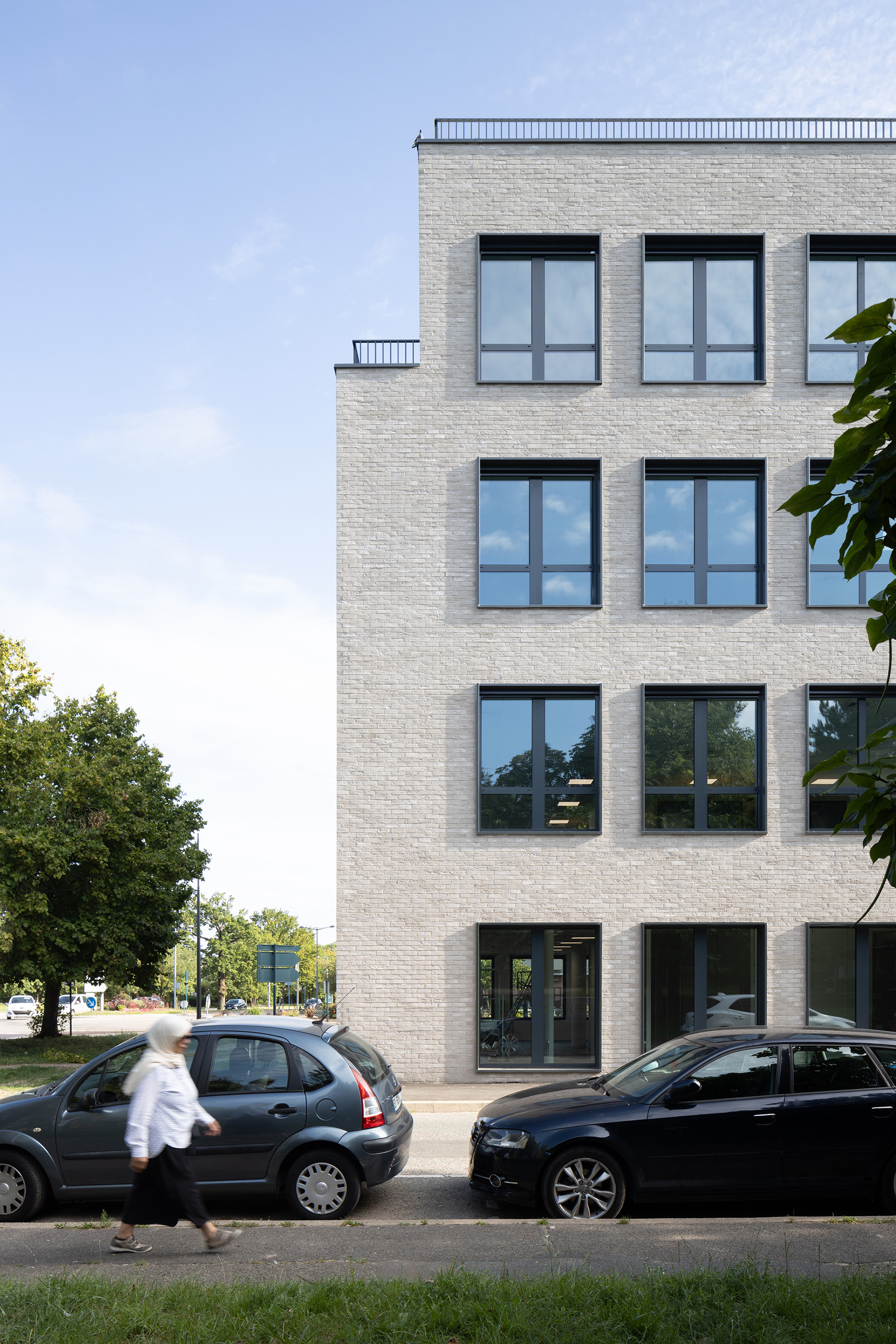
La singularité du projet réside dans la composition régulière et tramée des façades par de larges baies vitrées. Cette trame est soulignée par les menuiseries en aluminium gris anthracite dont l’encadrement est en léger débord.
Le projet amène une certaine sobriété dans son écriture architecturale et apporte des détails qualitatifs pour permettre l’insertion douce du bâtiment dans un quartier hétéroclite tout en marquant sa position d’entrée de ville.
La matérialité choisie est un parement de brique de couleur gris clair, moulée main. Elle répond au parti-pris architectural qui se veut contemporain et en adéquation avec la volonté de redynamisation du quartier, s’intégrant dans le paysage environnant.